Access World-Class Manufacturing Infrastructure
When the Missouri Protoplex facility opens in 2026, it will be unlike anything else in the region: a 117,000 square foot manufacturing innovation hub purpose-built for collaboration between industry and university. More than a lab, it's a shared workspace where your engineers can work alongside Missouri S&T researchers, test new processes on cutting-edge equipment, and move from concept to prototype with speed.
The facility is organized around four core manufacturing disciplines — advanced manufacturing, aerospace production, advanced metallurgy, and materials for extreme environments — each with both traditional lab suites and expansive high-bay manufacturing spaces designed for flexibility and rapid iteration.
Key features include:
- 50+ advanced manufacturing machines and supporting equipment across all four discipline areas
- $12M in advanced manufacturing equipment including laser powder bed fusion, directed energy deposition, 5-axis CNC, EDM, and hybrid additive/subtractive systems
- Shared-access model giving industry partners access to university-grade R&D infrastructure without capital investment
- Co-location opportunities for companies ready to embed a team within Missouri S&T's innovation campus — Solvus Global is the first major partner to establish a facility here
Available Equipment
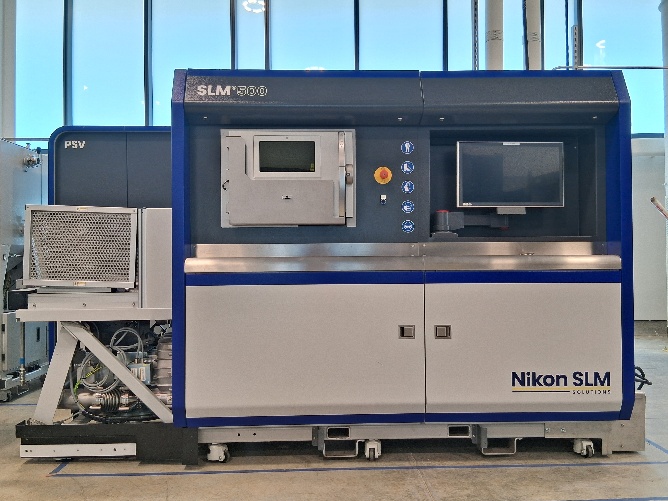
SLM 500 Quad Laser Powder Bed Fusion (LPBF) System
- Laser Powder Bed Fusion Technology (LPBF): Utilizes lasers to selectively melt metal powders layer-by-layer, creating complex and highly detailed parts directly from 3D CAD models.
- Large Build Volume: Capable of fabricating parts up to 500 x 280 x 365 mm, supporting complex geometries for industrial applications.
- Multi-Laser Configuration: Features up to four lasers working simultaneously, reducing build times while maintaining part accuracy.
- Material Flexibility: Processes a wide range of advanced materials, such as titanium, aluminum, and stainless steel alloys.
- Advanced Powder Handling: Automated powder recycling and dedicated depowdering station ensure operational efficiency and safe material handling
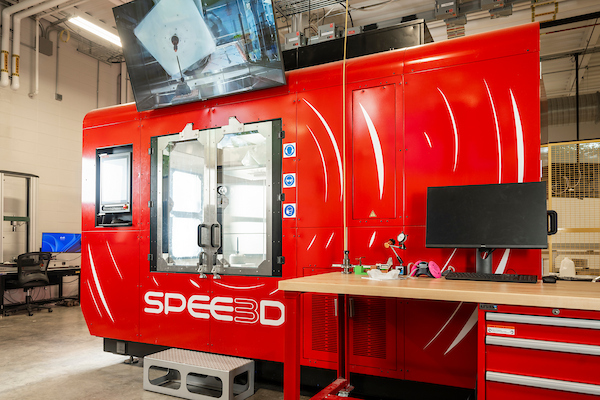
SPEE3D Warpspeed Metal Cold Spray 3D Printer
- Additive Manufacturing: Capable of producing complex shapes using ductile metal powder and path planning software to generate 3D shapes with robotic control and a stationary cold spray nozzle
- High Pressure Gas: Utilizes high pressure (500psi) compressed air or nitrogen to accelerate metal particles to speeds above Mach 3
- Speed: Build rates up to 10 lbs per hour (copper) up to 88 lbs using a 6mm bore nozzle (minimum feature size down to 6mm).
- Build Volume: Up to 40" diameter and 30" in height.
- Materials: Relies on material ductility to deform the metal particles. Typically softer metals such as aluminum alloys, copper, or bronze. Harder materials such as stainless steel are possible with the high temperature phaser nozzle .
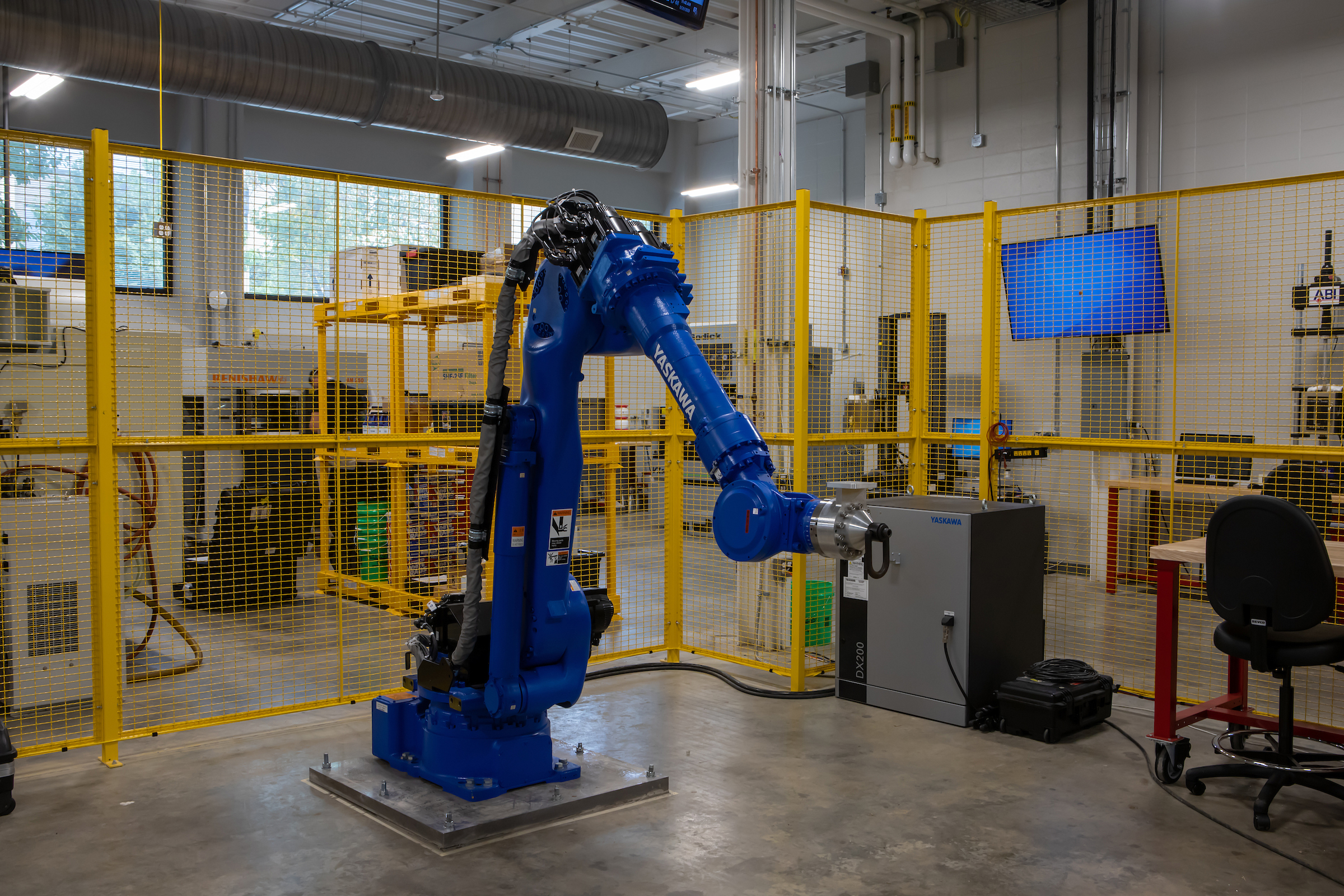
Yaskawa/Motoman MH180 Robot
- Multi-Task Capability: Handles both high-precision machining (milling, drilling) and grinding applications with enhanced performance.
- Improved Kinematic Accuracy: Equipped with a Kinematic Error Observer (KEO) that reduces inaccuracies and improves real-time end-effector positioning.
- Vibration Management: Enhanced stiffness optimization and vibration damping reduce low-frequency vibrations during machining.
- External Sensor Feedback: Integrates laser trackers and 6DoF sensors to improve orientation and positioning in dynamic environments.
- Payload Capacity: Supports up to 180 kg, allowing for heavy-duty machining tasks.
- High Repeatability: ±0.2 mm repeatability for precise, consistent operations.
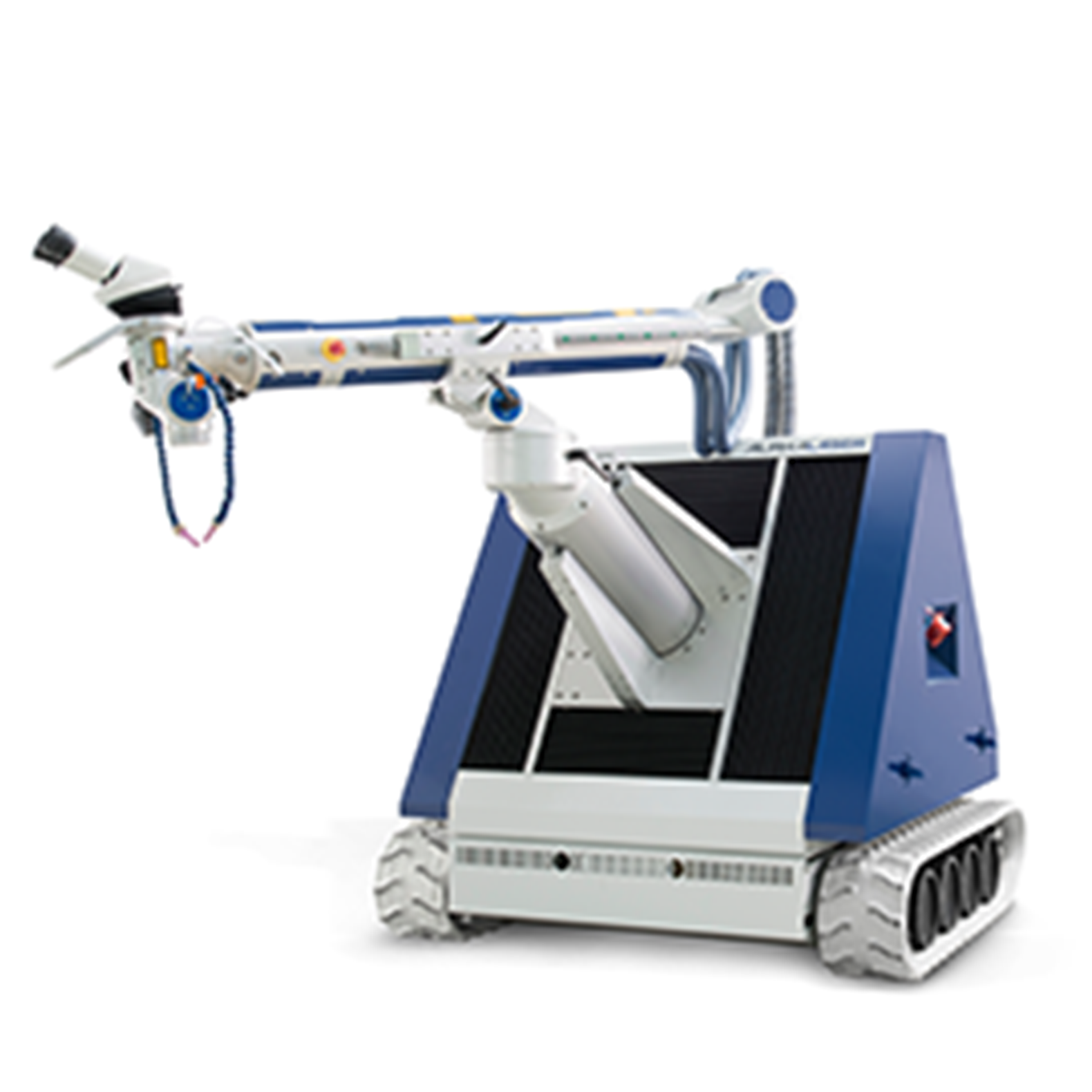
AlphaLaser ALFLAK900 Laser Microwelder
- Ultra-Precise Welding: Capable of welding with ultra-thin filler wire down to 0.003” and uniquely capable of joining materials without filler metal using just the laser.
- CNC Motion Capable: Equipped with a filler metal auto-feeder and fully programmable motion axes, programs can be written to precisely control welding processes.
- Laser Wattage Profile Shaping: Shaping the power output profile of the laser allows for ultimate control of heat input into the base material, minimizing HAZ and heat warping.
- Integrated Turntable: An integrated and CNC capable rotary stage allows for easy welding/coating of circular or cylindrical profiles.
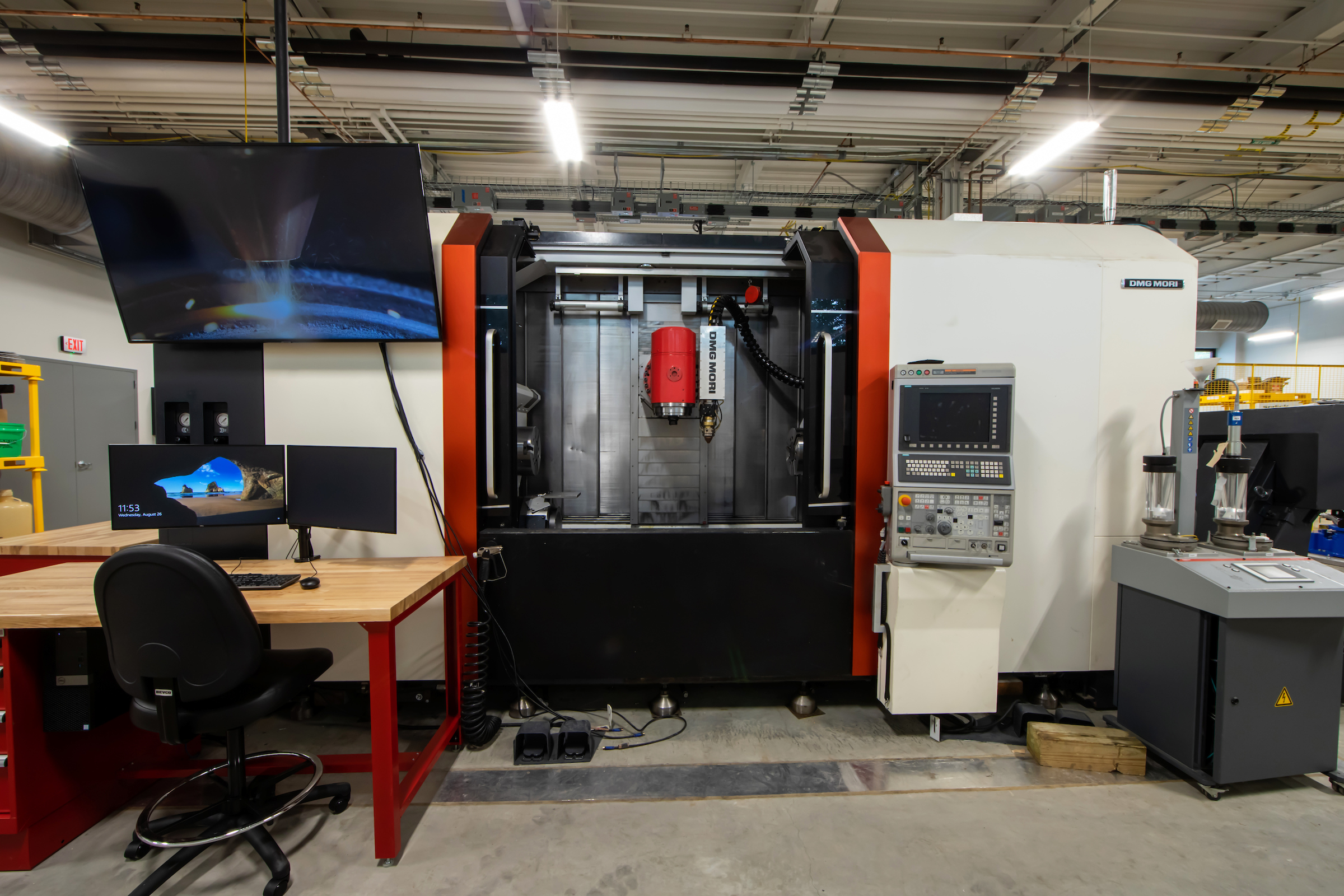
DMG Mori Lasertec 4300 Hybrid System
- Side-by-Side Additive and Subtractive: Utilizing both a CNC machining spindle and a blown-powder additive deposition nozzle allows for complex additive depositions to existing parts and machining down to finish in a single machine.
- Blown Powder Additive Capabilities: Metal 3D printing using blown-powder Direct Energy Deposition (DED) enables metal printing onto existing parts and offers ultimate flexibility in additive capability.
- Precision Machining: Extremely rigid machine components allow for precise machining of components.
- Lathe Capabilities: Lathe-style turning allows for easy additive and subtractive processes, even on large round parts such as rollers, axles, and cams.
- Large Working Area: Accommodates large components with precise control.
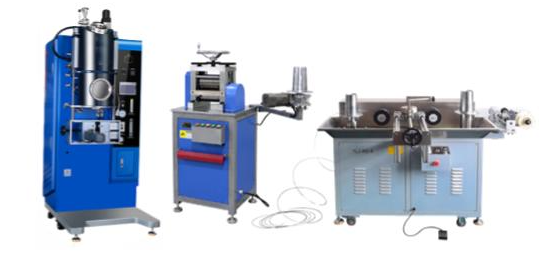
MTI Wire Draw Cell
- MTI IMCS-1700VC Continuous Casting Furnace: allows for melting of 1 kg to 10 kg of material at temperatures up to 1700°C under an inert argon atmosphere. Interchangeable dies and crucibles allow for a variety of materials to be cast at different final rod diameters from 6 mm to 14 mm.
- MTI YLJ-1220-W Wire Pressing Machine: provides the capability to reduce up to 14 mm diameter round bar to 1.5 mm edge length square rod. MTI SPG-6A-I induction heater allows for in-line heating of material during the rolling processes.
- MTI YLJ-WD-6 Wire Stretcher: allows for the drawing of wire from a 2 mm round die to a 1.15 mm round die. Implementation of a Keyence LS-9006D laser micrometer allows for in-situ measurements of wire diameter that can be used to calculate average wire diameter and roundness and to identify any notable defects along the wire length.
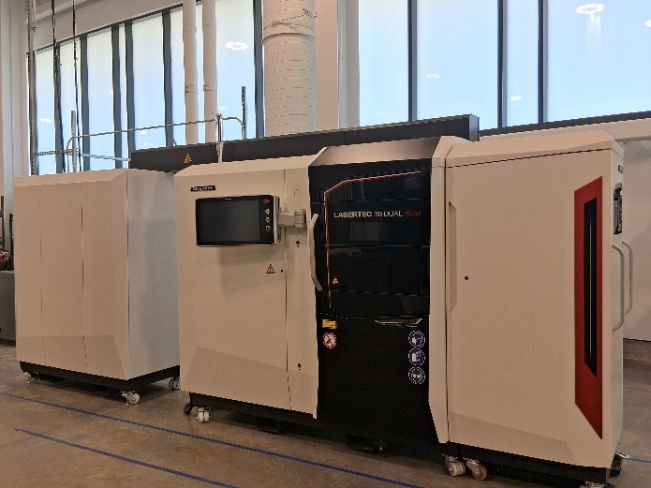
DMG Lasertec SLM 30
- Laser Powder Bed Fusion Technology (LPBF): Utilizes lasers to selectively melt metal powders layer-by-layer, creating complex and highly detailed parts directly from 3D CAD models.
- Build Volume: Capable of fabricating parts up to 300 x 300 x 300 mm, supporting complex geometries for industrial applications.
- Multi-Laser Configuration: Features up to two 600 watt lasers working simultaneously, reducing build times while maintaining part accuracy.
- Material Flexibility: Processes a wide range of advanced materials, such as titanium, aluminum, and stainless steel alloys.
- Advanced Powder Handling: Automated powder recycling and quick changeover times between materials gives flexibility for materials development or part production.
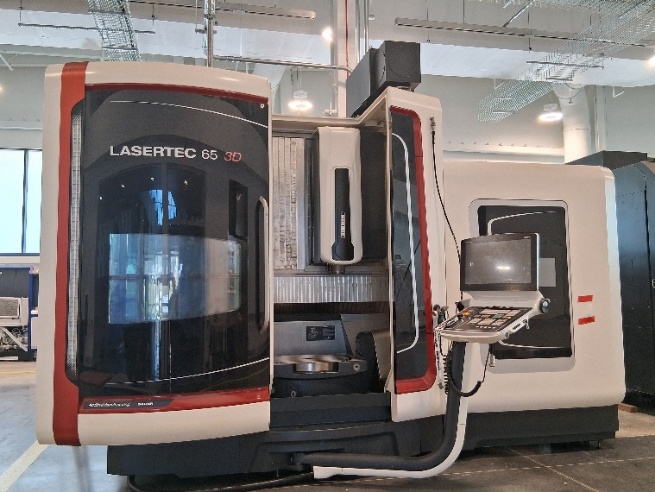
DMG Lasertec 65
- Side-by-Side Additive and Subtractive: Utilizing both a CNC machining spindle and a blown-powder additive deposition nozzle allows for complex additive depositions to existing parts and machining down to finish in a single machine. Laser deposition head retrieval and storage can be automated for a seamless hybrid additive/subtractive process.
- Blown Powder Additive Capabilities: Metal 3D printing using blown-powder Direct Energy Deposition (DED) enables metal printing onto existing parts and offers ultimate flexibility in additive capability. Built with a 2,500W fiber laser
- Precision Machining: Extremely rigid machine components allow for precise machining of components.
- 5-axis Capabilities: Motion platform is based off a Siemens Sinumerik 840D with 3 axis X/Y/Z and a 2 axis positioner (tilt/turn) for complex shapes and coordinated motion.
- Large Working Area: Accommodates large components up to 25.6in diameter x 22in height and up to 1,323 lbs capacity.
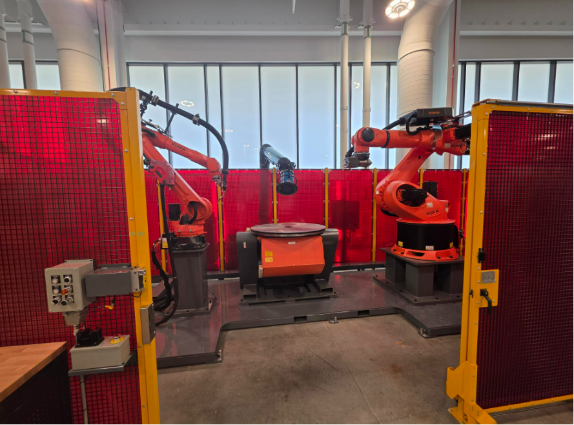
Robotic Wire Arc Hybrid Additive/Subtractive Cell
- Side-by-Side Additive and Subtractive: Utilizing both robotic wire-arc additive manufacturing (KUKA KR50 R2500) and a heavy-duty 5,000 lb capacity 2-axis positioner allows for complex additive depositions to existing parts and machining down to finish in a single machine.
- Wire-Arc Additive Capabilities: Metal 3D printing using wire-arc processes enables high deposition rates and precise control over welding parameters using the Fronius TPS 500i CMT torch. It can also be used in various modes for wire-arc cladding and hard-facing applications.
- Robotic Machining: The KUKA KR480 milling robot is capable of machining of materials such as steel while maintaining tolerance due to its rigid design. Combined with advanced laser tracking metrology, it is capable of relatively high precision milling and grinding activities for a robotic system.
- Large Working Area: Accommodates large components up to 60" diameter and 60" height.
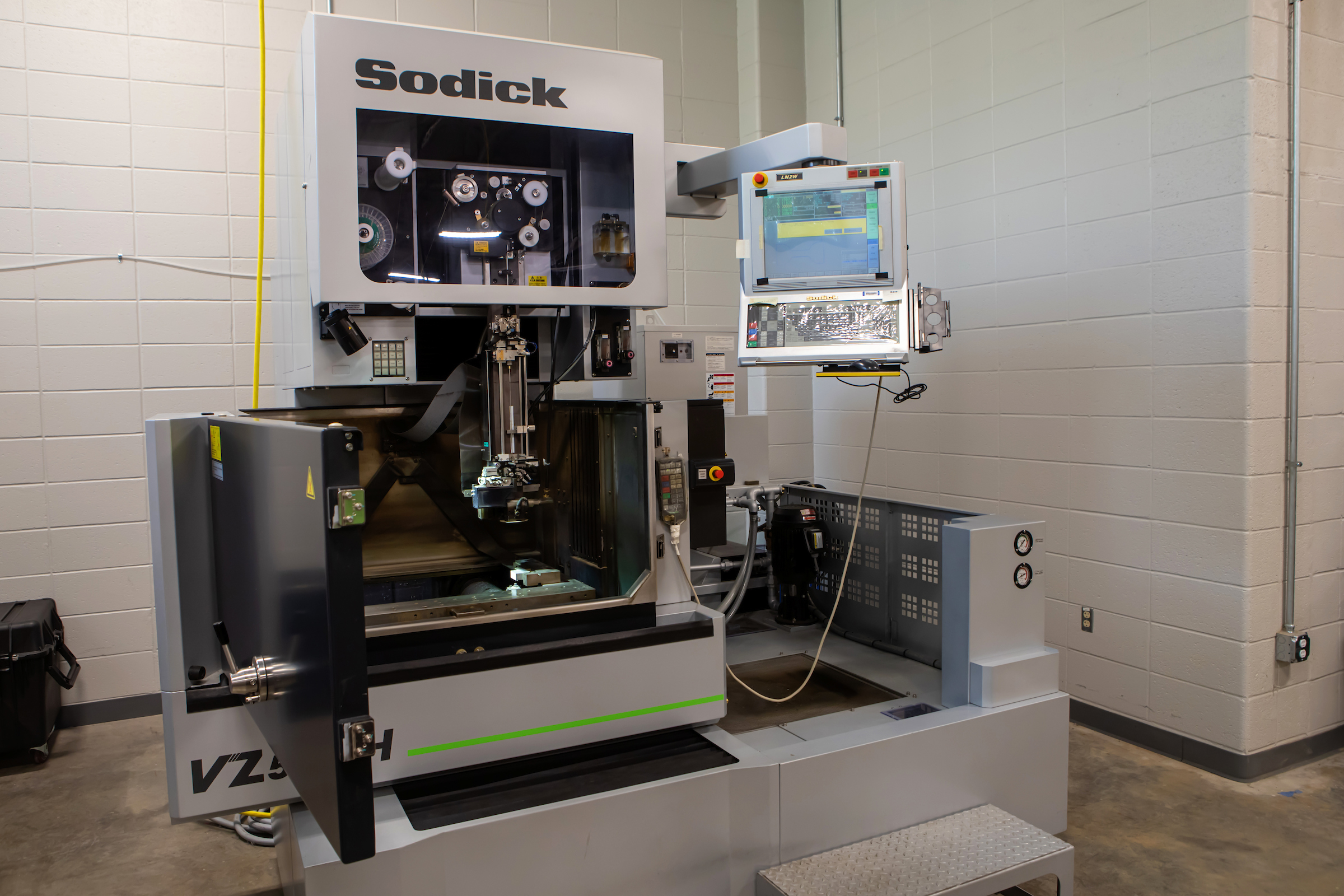
Sodick VL600QH Wire EDM
- Incredible Machining Accuracy: Uses extremely thin conductive wires, this machine etches material away to easily produce extremely precise parts.
- Large Capacity: Large working area capable of machining large parts (600mm X 400mm X 500mm).
- Flexible for General-Use Machining: While other EDM processes frequently use specialized dies to produce geometries, wire EDM machines are good for general use machining and flexible .
- Easy Machining on Extreme Hardnesses: Wire EDM processes have low force requirements and allow for easy and precise machining of any conductive material, even extremely hard materials.
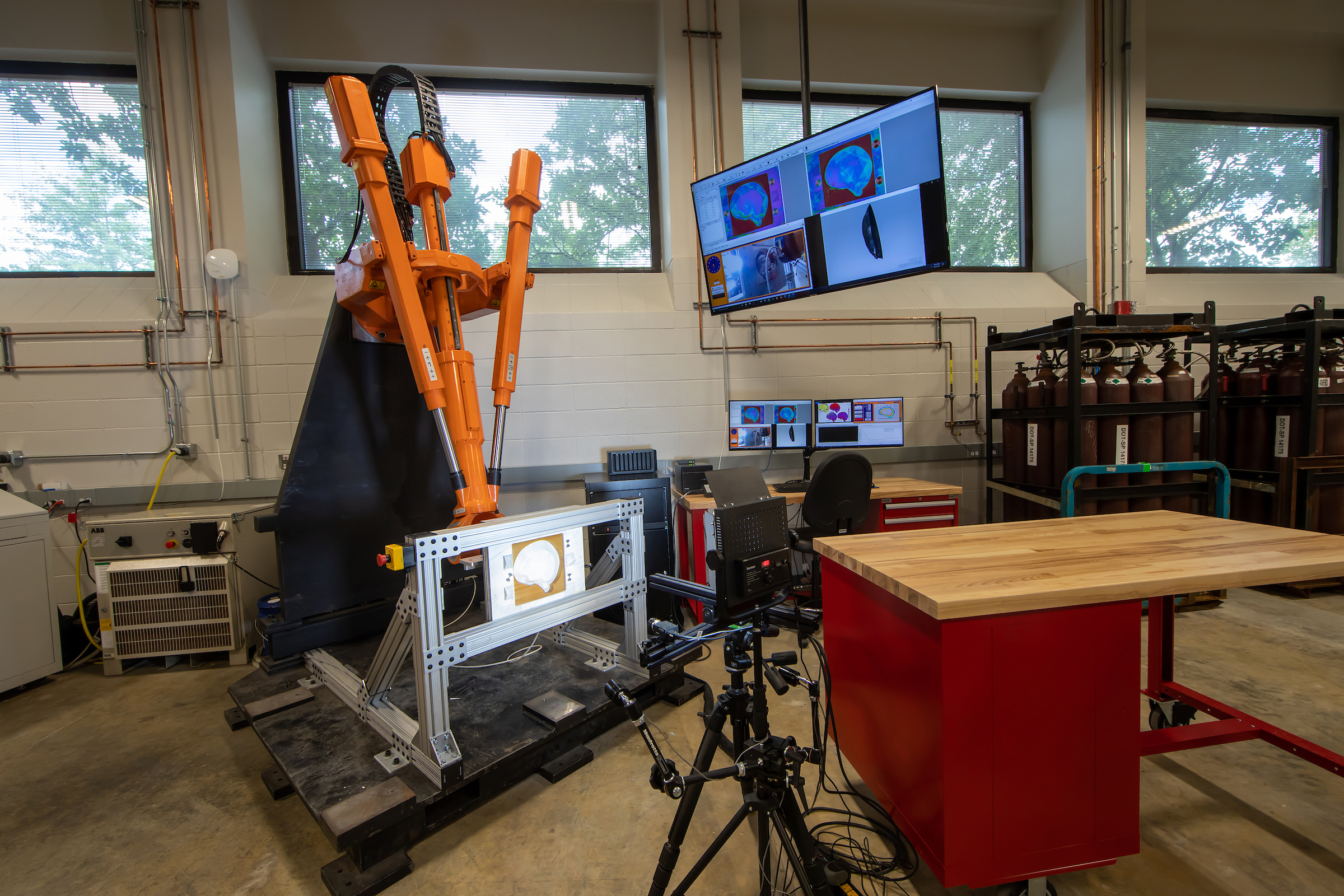
Incremental Sheet Forming
-
Freeform Sheet Forming: Sheet forming processes traditionally require large, expensive dies that require huge amounts of design and analysis before they are ready for production. Incremental sheet forming allows for a freeform, flexible approach to sheet forming by using a robotic manipulator and a deformation tool.
-
Legacy Part Manufacturing: Freeform sheet forming allows for the manufacture of old, discontinued parts to be manufactured without the original sheet forming dies, reducing the need for discontinued inventory and production line downtime for changeovers.
-
One-Off and Prototyping Capabilities: Removing the need for large, expensive opens up vast opportunities for one-off sheet forming and prototyping applications .
-
Visual Dimensional Feedback: Dual cameras and specialized paint markings allow the sheet to be monitored during the forming process to validate dimensions and implement feedback corrections to ensure accurate final products.
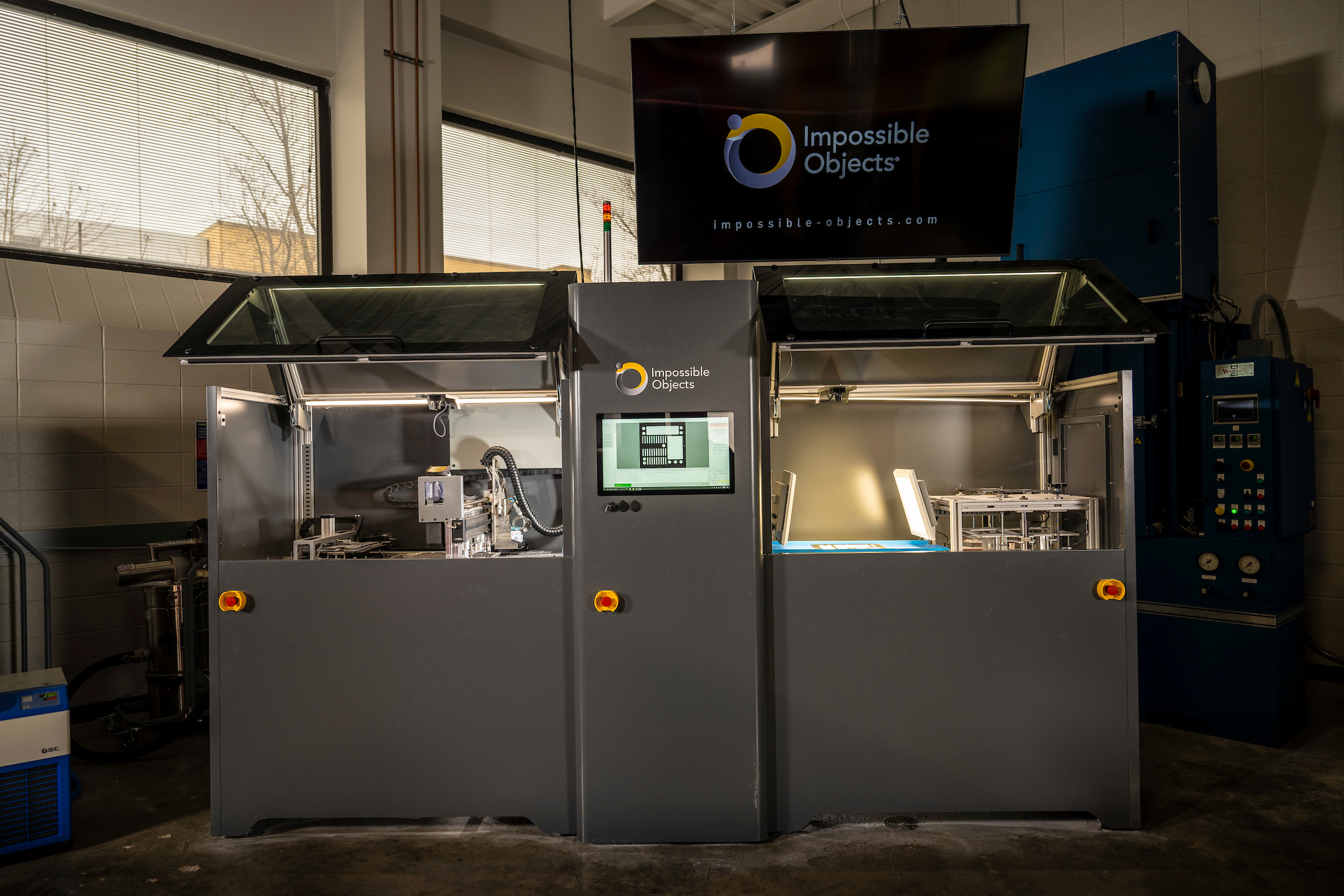
Impossible Objects Composites Based Additive Manufacturing (CBAM)
-
Build Volume: Maximum build size up to approximately 12" x 12" x 2". Thicker parts can be produced on a case by case basis with certain considerations
-
Speed: Runs two (2) sheets per minute automated from start to finish. The final build block processing time in the heated press depends on final thickness.
-
Resolution: High fidelity printing up to 600dpi. Compressive forces in the carbon fiber are the only limit on feature size and depend on durability of polymer matrix material (PEEK or Nylon 12).
-
Materials: Proven with carbon fiber and fiberglass 0.05mm thick sheets and a thermoplastic polymer PEEK or Nylon 12 powder.
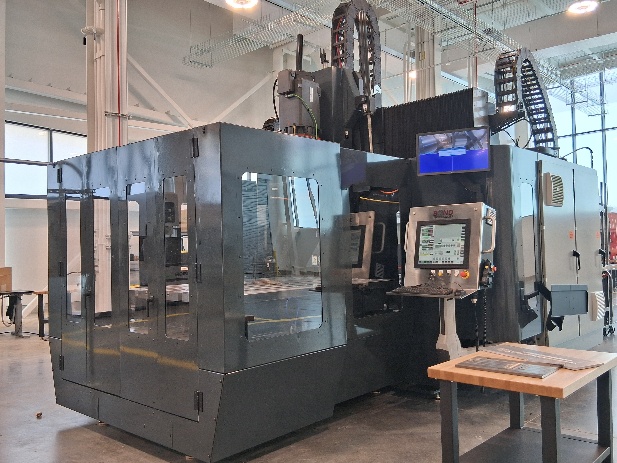
Bond Technologies GL7 Friction Stir Welding Machine
- Friction Stir Welding Technology (FSW): Uses a rotating tool to join metals through plastic deformation, creating defect-free, high-strength welds without melting the material.
- Metal Stock Compatibility: Utilizes solid metal stock to weld aluminum, magnesium, and other non-ferrous alloys.
- Advanced Additive Capabilities: Equipped for Additive Friction Stir Deposition and Friction Cladding, allowing material deposition for part enhancement.
- High Structural Integrity: Low thermal distortion and excellent mechanical properties, ideal for aerospace and heavy industry applications.
- Robust Work Envelope: Accommodates large components with precise control over joint integrity.
More Equipment Coming Soon
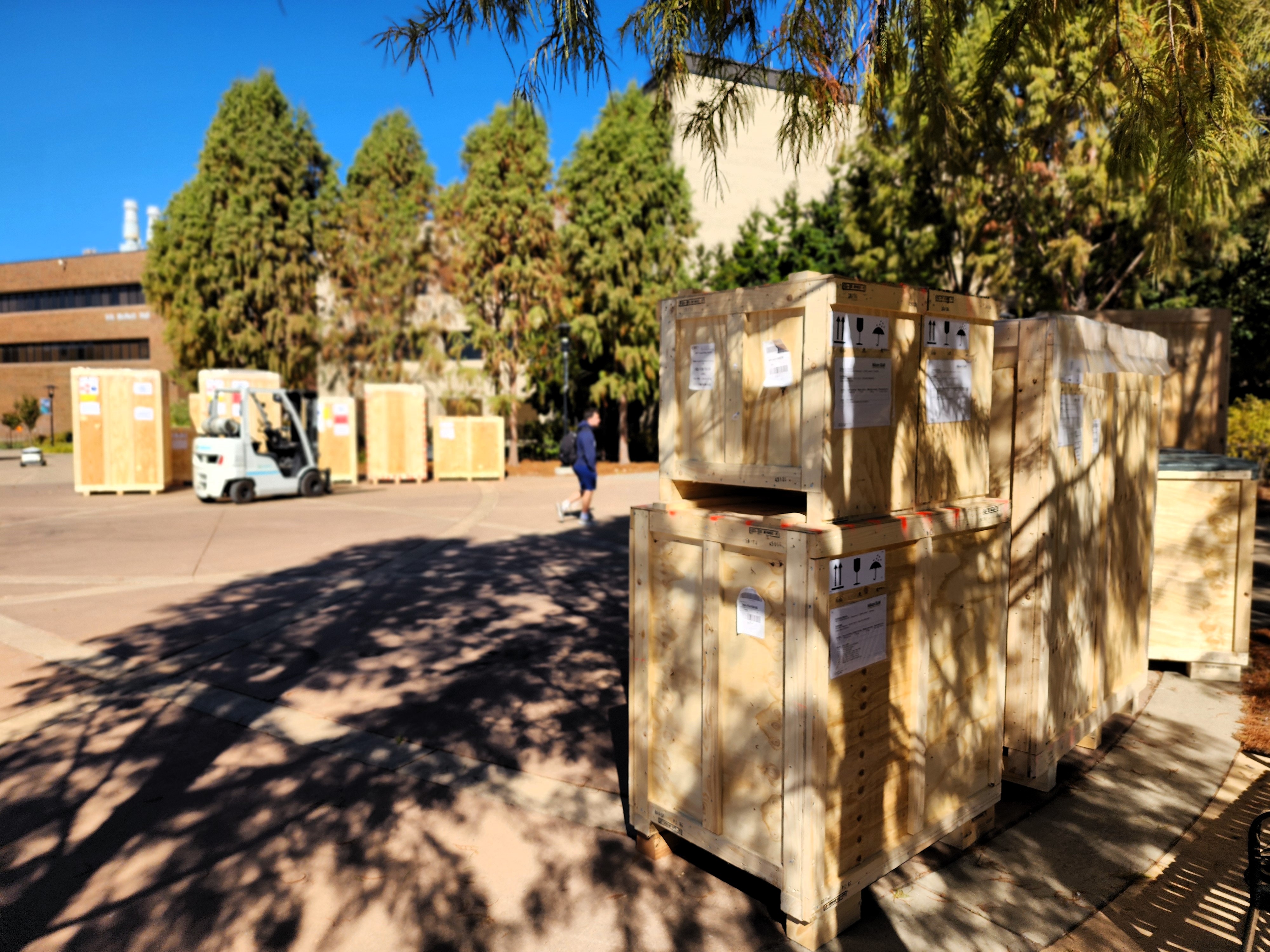
Our New Equipment is Being Added
As our areas grow, so do the number of pieces of equipment in our labs. 58 new pieces of equipment are in the process of being added including a next gen foundry, fatigue testing service center, solid state additive manufacturing center, and a CNC machine shop.
Usage Rates
View the usage rates for equipment from the Center for Advanced Manufacturing.