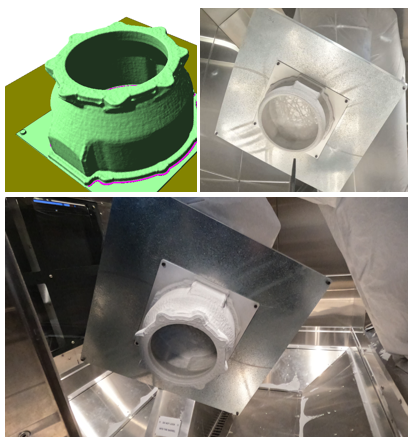
 The Challenge
Missouri manufacturers know the frustration: you need a low-volume, high-mix part, but casting lead times are long, foundry capacity is tight, and machining from billet burns through material at ratios of 10 to 1 or higher — meaning 90% of your raw material ends up as scrap. That's the gap the Missouri Protoplex set out to address.
Our Approach
Our team with the Center for Advanced Manufacturing evaluated cold spray additive manufacturing as a practical alternative for parts where traditional methods break down. Unlike laser-based additive processes, cold spray is a solid-state technology. It bonds metal powder through high-velocity impact rather than heat, which eliminates many of the distortion, oxidation, and cracking issues common to other methods.
Using the SPEE3D WarpSpeed system with Aluminum 6061 — one of the most widely used structural alloys in manufacturing — our engineers tested real production scenarios, tuned process parameters, and established design guidelines that translate directly to shop floor decisions.
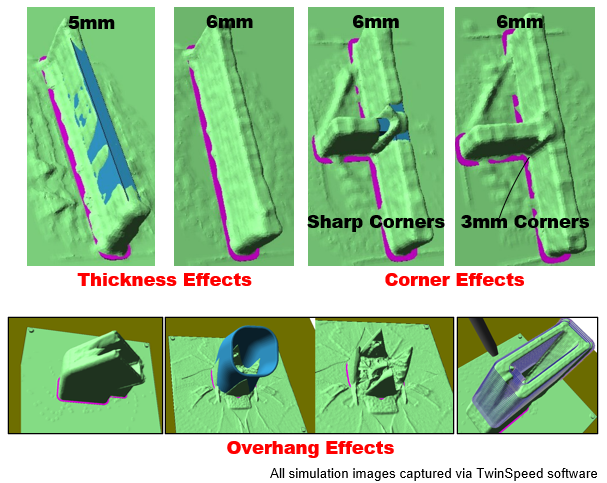 What We Found
Cold spray reduced the buy-to-fly ratio from as high as 17:1 down to approximately 2.5:1, placing material only where it's needed. A typical part that would take days through conventional methods can be produced in approximately six hours and ready for heat treatment and final machining.
It's not a universal replacement for casting or machining. But it's a strong fit when:
- Casting lead times are too long or unpredictable
- Low volume makes traditional tooling hard to justify
- Part geometry drives excessive machining time
- Large part sizes create sourcing challenges for thick plate
Working With Us
The Missouri Protoplex works with student teams, faculty, and industry partners to turn design ambition into manufactured reality. If your team or organization is exploring what metal additive manufacturing can do for your next project, we'd like to hear from you.