 The Challenge
In competitive engineering, every gram matters. For student racing teams, the difference between a podium finish and a mechanical failure often comes down to component design — and whether the manufacturing process can keep up with the engineering ambition.
That's the challenge Missouri S&T's Formula SAE and Baja SAE teams brought to the Missouri Protoplex.
Our Approach
Working with students from Missouri S&T's Student Design and Experiential Learning Center (SDELC), our team provided access to laser powder bed fusion (LPBF) technology on the Protoplex's SLM® 500 system. Using AlSi10Mg aluminum alloy, both teams worked directly with Protoplex engineers to redesign critical components that traditional manufacturing couldn't optimize effectively.
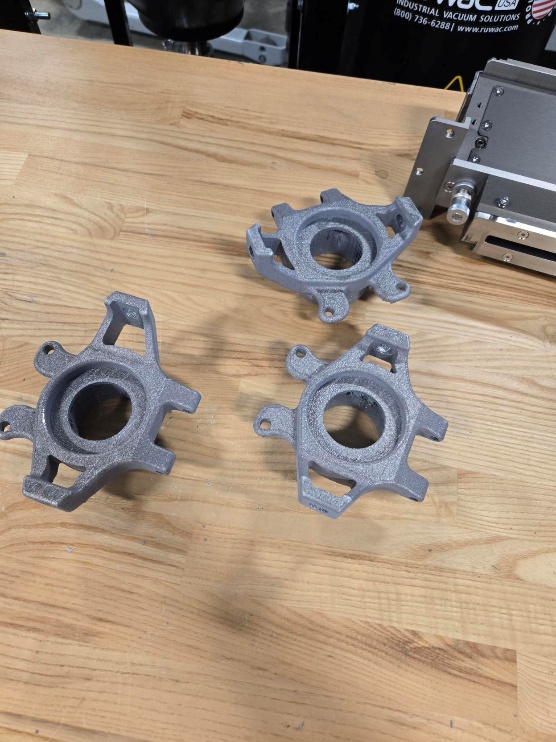
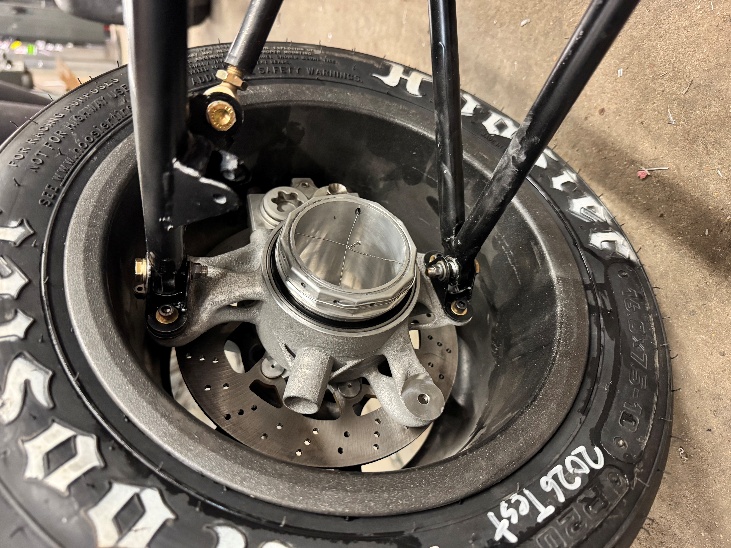
- Formula SAE: Redesigned the car's uprights using generative design — a computational approach that automatically removes unnecessary material while maintaining structural performance. The component was printed, post-processed, and installed on the race car.
- Baja SAE: Used finite element analysis (FEA) to optimize a component for off-road durability, reducing weight without sacrificing the toughness needed for competition conditions.
What We Found
Metal additive manufacturing isn't just a prototyping tool — it's a competitive advantage when design freedom is paired with engineering rigor. Both teams produced components that would have been difficult or impossible to manufacture through conventional methods, and did so within an academic semester timeline.
Working With Us
The Missouri Protoplex works with student teams, faculty, and industry partners to turn design ambition into manufactured reality. If your team or organization is exploring what metal additive manufacturing can do for your next project, we'd like to hear from you.